BLOG ARTICLE
BLOG ARTICLE
A Business Owner’s Guide to Smart Commercial Construction Budgeting and Decisions
Most people judge a construction company on two things: whether it can stick to a budget and finish on time. Steve Ashton, founder and CEO of Ashton Construction Services (ACS), thinks they’re setting the bar too low. “On-time and on-budget is the floor, not the finish line,” he says. “If that’s all we hit, the job we’ve done is simply adequate.”
You’ll also want to think about whether your business can keep earning while work’s underway, how well the finished space will suit the way you operate, and how it will hold up to Bow Valley winters.
All of those depend on planning early and communicating clearly — the same two things that protect a realistic budget. In this guide, you’ll learn:
- How to budget for a commercial construction project
- How to avoid budget creep
- How to maximize your commercial construction investment
- How to assess value engineering vs cost-cutting
How to Budget for a Commercial Construction Project
Commercial construction budgeting starts before the drawings are done. Steve suggests getting a builder involved before the design is finished, otherwise you could spend months — and significant amounts of money — developing a complete set of drawings, only to get quotes back that far exceed what you had in mind. By then, the design budget is spent and the drawings need reworking.
“It’s not a pricing problem; it’s a sequencing problem,” says Steve. “And it’s avoidable.” Including preconstruction services gives clients a realistic budget at a point when the design can be adjusted to meet it. Early involvement also lets experienced builders spot constructability issues before they become expensive surprises.
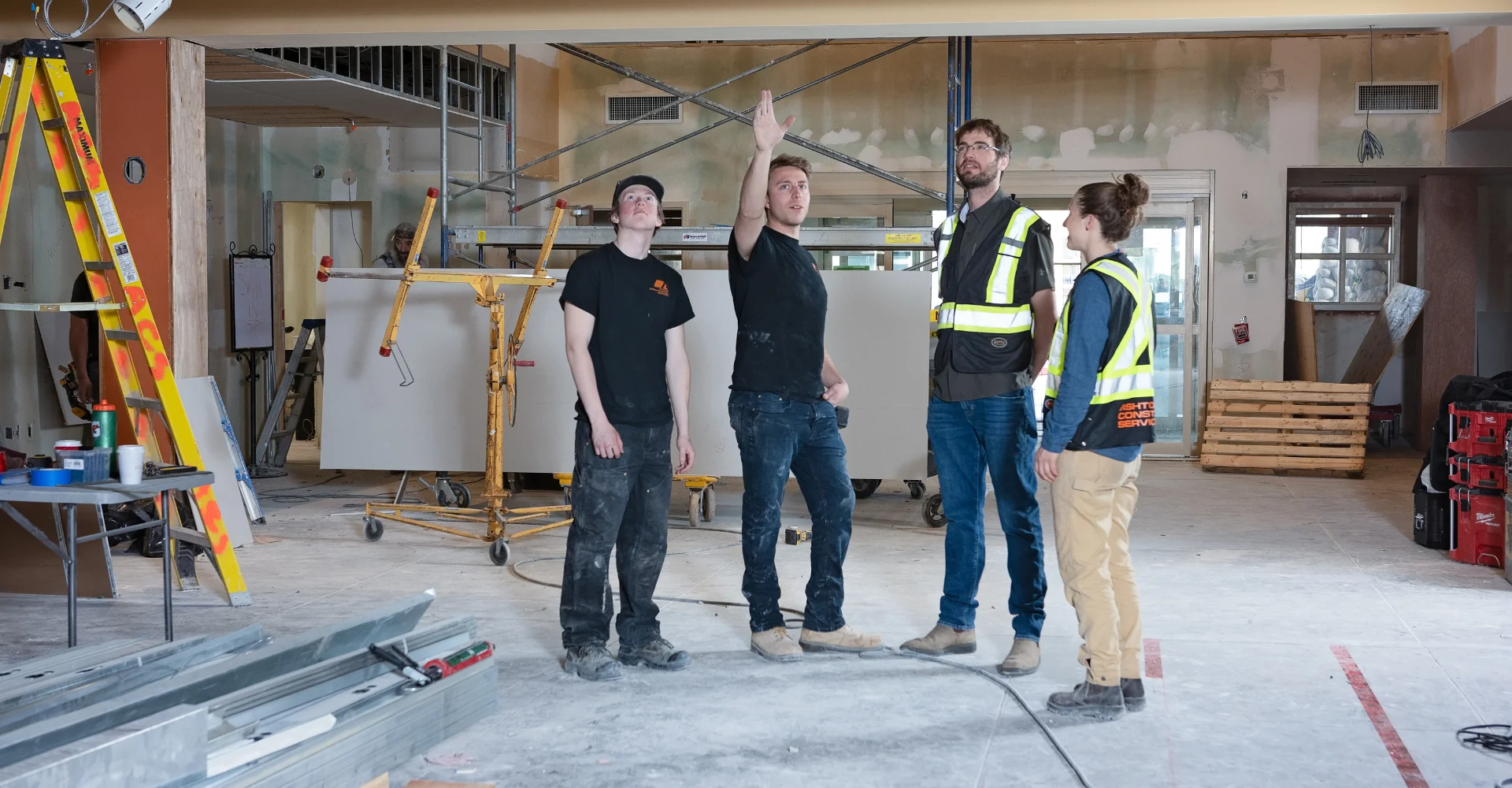
Preconstruction is where practical problems get caught. If that step is missed, you might not discover that your staff entrance doesn’t work for how you actually load in until after the space is finished. Before anything gets framed in, try walking your builder through an average working day in your space. Include deliveries, staff, garbage, busy periods — all of it.
That lets you build the schedule around your operating calendar, not the builder’s. For example, a subcontractor issue nearly delayed the opening of the Banff Sport Medicine clinic. “ACS found a way to work around our business schedule to finish up, which allowed us to open on time despite the trade delay,” says clinic manager Sara-Jane Klinker.

Name Your Real Number, Then Add 10%
A lot of business owners keep their budget to themselves, because they assume that if they name a figure, that’s what they’ll be quoted. Steve says the opposite is true. “If I don’t know your ceiling, I can’t protect it, and we’ll both find out at tender, when it’s expensive to fix.”
Then set aside a contingency of your own (ACS recommends 10%), separate from anything in the construction company’s budget. ACS doesn’t build owner contingency funds into its budgets, because Steve wants owners to see the real cost of the work, and then assess the risk for themselves.
“Every renovation finds something,” he says. “Ours find fewer, because we’ve opened up a lot of walls in this valley and we know what’s usually behind them — but nobody finds nothing.”
How to Avoid Budget Creep
“Budget creep almost never looks like one big number,” says Steve. “It’s forty small ones.” And most of those small numbers come from four places:
- Someone makes a “while you’re in there, could you…” request during a hallway conversation with the superintendent. No one priced it, so it feels free.
- When design decisions keep developing or changing after the budget is set, it’s very difficult for a builder to quote a firm budget.
- Contractors sometimes use allowances — placeholder amounts for items such as millwork or lighting that haven’t been fully selected or priced.
- The final cost can be higher or lower.
- In older Bow Valley buildings, it’s common to find undocumented changes, and mechanical and electrical quirks that can be costly to address.
For better commercial construction cost control, require a written price before approving any change order, and ask your builder how they protect the project budget. ACS takes three steps to keep scope from creeping.
Progressive Estimating
The first estimate gives you a rough number based on the initial concept, and the quote firms up as final design decisions are made. Every time ACS reassesses an estimate, the company reconciles the quote against the previous one. “When a number moves, we can point to exactly what design decision moved it,” says Steve. “That’s the conversation that keeps trust — the owner sees the cause, not just the outcome.”
Open-Book Cost Reporting
On most ACS tenant improvement projects, owners pay the actual cost of the work plus a fixed 10% fee. That means you see every invoice, line by line, while the fee stays fixed, giving you visibility into where the money is going.
Monthly Reports That Include the Projection
Owners get a monthly review of actual spending against the budget, and ACS reviews commitments weekly. The useful part is that the report says where the project is heading. “Telling an owner they’re at 60% of budget is useless,” says Steve. “Telling them they’re at 60% and tracking to finish 4% over unless we make a decision on the mechanical scope this week is the whole job.”
Permits, weather, wildlife rules, and delivery delays can affect your budget too. Approval timelines vary depending on the project, and a permitting issue can throw off your schedule. A builder with local trades and relationships can help you plan around them.
How to Maximize Your Commercial Construction Investment
Once the budget is set, decide where to spend and where to save. Steve recommends considering the long-term cost of every choice. Three questions can help:
Consider current cost: What’s the price difference today, and can you cover it without eating into the 10% you set aside for contingencies?
Think about long-term value: What’s the maintenance and replacement cycle? “Freeze-thaw, snow load, UV, wind — this valley is hard on buildings in a way Calgary isn’t,” says Steve. “A finish or an envelope detail that’s fine in the city can fail here within five years.”
Assess risk: If something breaks, what would it cost you in closures? On a tenant improvement, downtime can be the biggest project cost, and it never shows up on the budget sheet.
Value Engineering vs. Cost-Cutting
Consider the flooring in a busy restaurant. The cheaper product might look identical on opening day, but by year four, it’s worn through in the traffic lanes and you have to close for a week to redo it. Now you’ve paid twice for the material, twice for the labour, and once in lost revenue. “The good product was never the expensive option,” says Steve. “It just had a bigger number on the first invoice.”
Smart construction decisions for business owners don’t always involve premium options. Sometimes you’re just trading performance for prestige, and a good builder will tell you the difference. “My job is to tell an owner which is which,” says Steve, “and that means being willing to talk them out of spending money.”
That’s the difference between value engineering and cost-cutting, two terms the industry often uses interchangeably. “Cost-cutting takes quality out to hit a number. Value engineering finds a different way to get the same performance for less,” says Steve. “One of them shows up as a problem in year three. The other doesn’t.”
If you really want to maximize commercial construction investment, go to your first meeting with three pieces of information: how long you’ll be in the space, how hard your business uses it, and what a day of closure would cost you. “With those details, I can usually tell you the right choice in about ten minutes,” says Steve. “Without them, anyone giving you an answer is just guessing.”
Planning a commercial renovation or tenant improvement in Canmore or Banff? Book a preconstruction conversation with the ACS team today.
Explore other Case Studies & Blogs

Construction in Banff: What You Need to Know About Commercial Builds in a National Park
Construction in BanffBLOG ARTICLEConstruction in BanffBLOG ARTICLEConstruction in Banff: What You Need to Know About Commercial Builds in a National ParkCommercial construction in Banff National Park comes with its own unique set of challenges. Between strict...

How Construction Project Management Tools Help Maintain Momentum
Construction Project ManagementBLOG ARTICLEConstruction Project ManagementBLOG ARTICLEHow Construction Project Management Tools Help Maintain MomentumIf there’s one skill you need in construction, it’s the ability to think on your feet. Large, long-term projects...

Built to Last: Local Partnerships, Strong Communities, Quality Construction
Built to LastBLOG ARTICLEBuilt to LastBLOG ARTICLEBuilt to Last: Local Partnerships, Strong Communities, Quality Construction Let’s face it, Canada’s shifting trade relationship with the US has been a rollercoaster ride, and there’s no sign of it slowing down anytime...